A new Green Customs training module brought Kenyan regulators and private-sector representatives together in Mombasa to strengthen understanding of environmentally sensitive commodities and support more efficient trade.
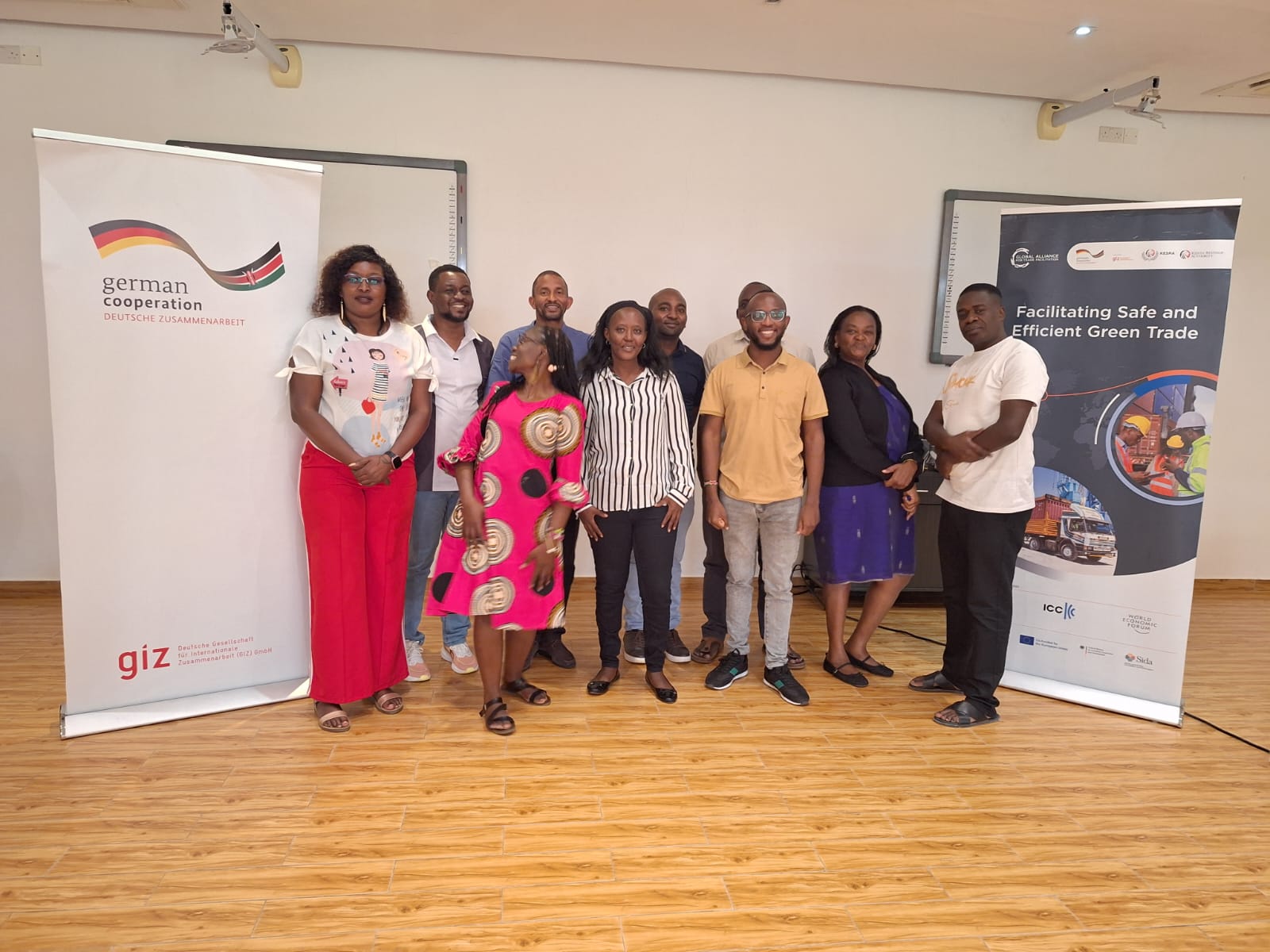
From 20 to 24 July 2026, the Global Alliance for Trade Facilitation (the Alliance), GIZ and the Kenya School of Revenue Administration (KESRA), in partnership with the Kenya Revenue Authority (KRA), conducted Module 4 of the Green Customs training in Mombasa, Kenya.
Titled “Facilitating Safe and Efficient Green Trade,” the module focused on helping border clearance agencies and businesses manage environmentally sensitive commodities regulated under the Rotterdam Convention, while applying trade facilitation principles and tools to support compliant trade.
The training was developed by KESRA with the support of GIZ and the Alliance, based on a needs assessment identifying key border challenges related to the most-traded environmentally sensitive commodities. GIZ and the Alliance then facilitated curriculum development workshops to incorporate these findings into the module.
The module was subsequently piloted in Mombasa, with detailed feedback from public- and private-sector participants informing its refinement. This process helped ensure the final programme was practical, grounded in border realities and responsive to stakeholders’ needs.
The five-day event brought together 29 participants from 16 institutions, including 12 regulatory and border clearance agencies and 4 trade and industry organisations. The training was delivered through two dedicated cohorts – one for regulators and one for the private sector – bringing together perspectives from across the border clearance process.
The module combined technical knowledge with hands-on learning, providing regulators and private-sector representatives with an opportunity to share experiences, identify challenges and explore practical ways to improve the movement of compliant consignments. Participants worked with Kenyan case studies, primary legal texts, practical exercises and group work focused on the realities of clearing environmentally sensitive commodities.
The discussions also highlighted the importance of a whole-of-government approach. Participants emphasised that agencies have distinct but interconnected mandates and that stronger coordination, information sharing and partnership can help stakeholders work towards a common goal.
For both regulators and businesses, the training reinforced an important message: effective environmental controls and efficient trade can go hand in hand. Harmonising procedures, reducing unnecessary steps and strengthening awareness can support compliance while reducing friction at the border.
The strong institutional representation and cross-sector engagement demonstrated the value of bringing regulators and businesses into the same conversation around green trade. Participants called for continued engagement between the public and private sectors, as well as greater cross-training and proactive information sharing.
Beyond the programme itself, the initiative has resulted in a practical training product that KESRA can use and scale up for future Green Customs training in other 23 countries in Kenya where KESRA provides customs training. This creates a lasting institutional resource that can continue to build capacity beyond the initial project activities.
With a practical, needs-based training module now available for continued use and adaptation, Kenya is building stronger foundations for more efficient green trade.