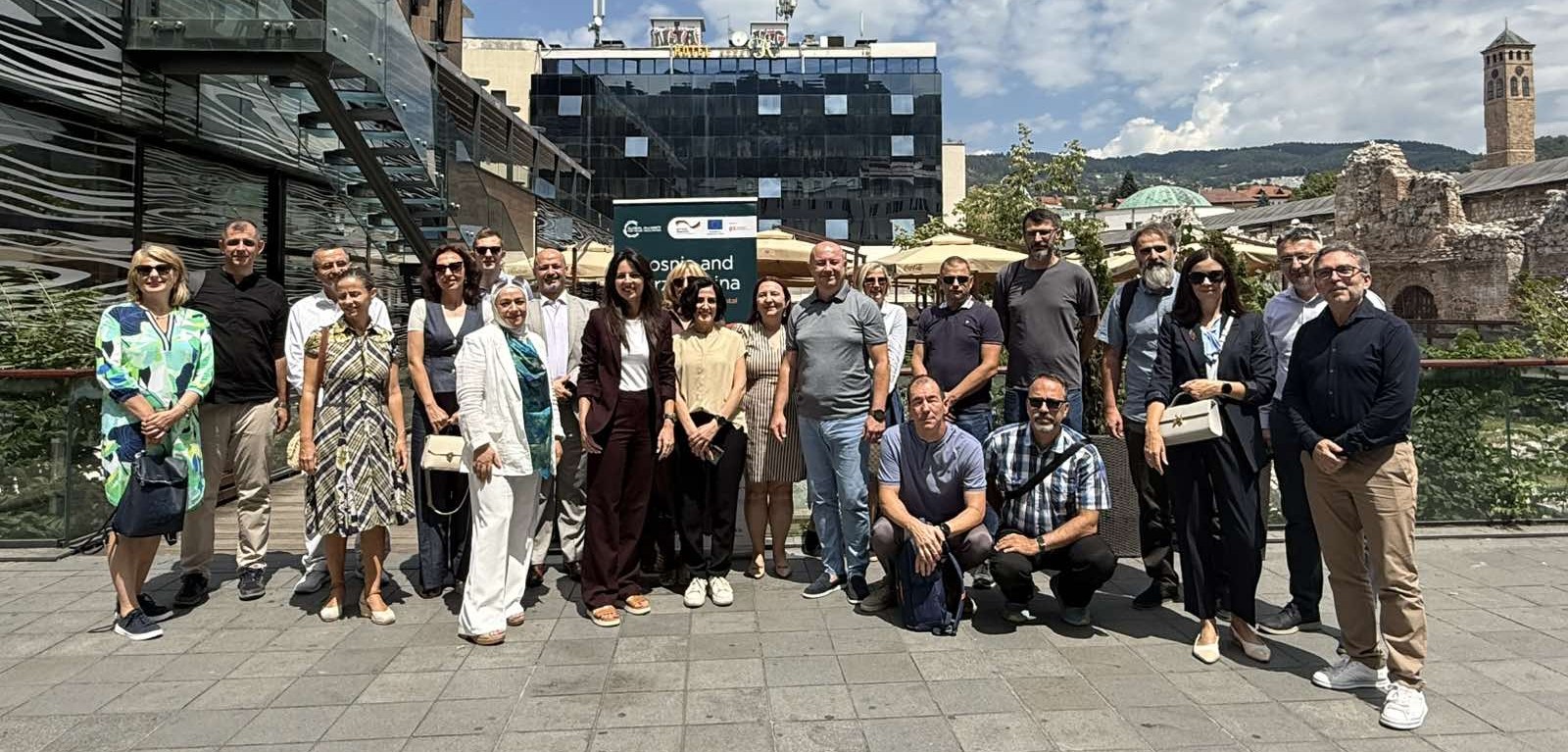
July 2026, Sarajevo – Customs administrations and postal and express operators from Bosnia and Herzegovina and Jordan came together in Sarajevo for a two-day knowledge exchange on improving customs clearance procedures for e-commerce, postal and express shipments.
Organised by the Global Alliance for Trade Facilitation through GIZ’s Partnerships for Sustainable Trade project, together with GIZ’s RegioTrade/EU4Trade project, the exchange focused on ASYCUDA, UNCTAD’s customs management software used in over 100 countries, and Pre-Arrival and Pre-Departure Processing.
The exchange took place as part of the Alliance’s ongoing project in Bosnia and Herzegovina, which aims to digitalise and streamline customs clearance for postal and express shipments. Working with the country’s Indirect Taxation Authority, postal operators and the private sector, the project is supporting upgrades to the national ASYCUDA World customs system and the introduction of electronic pre-arrival and pre-departure processing, with the aim of reducing clearance times by 30%.
With the rapid growth of e-commerce and the increasing volume of small, low-value parcels crossing borders, customs administrations face growing pressure to process shipments efficiently. Pre-Arrival and Pre-Departure Processing allows customs authorities to review shipment data before goods arrive, helping reduce clearance times and improve predictability for businesses and consumers.
Over two days, participants shared practical experiences from using ASYCUDA and explored its application to postal and express shipments. Representatives from Jordan, where these solutions have already been implemented, shared lessons learned with their counterparts in Bosnia and Herzegovina. Participants also visited the Customs Department at Sarajevo International Airport.
The exchange followed a Steering Committee meeting held the previous day to review project implementation progress and next steps, including work on the Postal, Express and Authorised Economic Operator (AEO) modules.
By strengthening knowledge exchange and cooperation between customs administrations and the private sector, the initiative contributes to efforts to make border processes faster, more transparent and more predictable, ultimately supporting trade competitiveness.